Stacy Adams Photography and the Spring Dress-Shoe Campaign
Stacy Adams photography is a useful lens on how men's dress-shoe brands plan spring campaigns: lookbooks, color stories and two-tone styling.
Starting with the lookbook
Stacy Adams photography, in the sense of imagery built around confident men's dress shoes, starts long before the shoot day. A spring campaign for this kind of footwear begins with a lookbook plan: which styles lead, which colorways need on-foot coverage, and how many looks the day can realistically hold. The plan also tells you what equipment, crew and time each location needs.
Map each shoe to a look and a location. A typical day might cover eight to twelve looks, each needing a full-length frame, an on-foot detail and a product still. Write that down as a grid before you book anyone.
Casting follows from the grid. Look at fit, posture and presence: dress shoes look best on models who carry tailoring comfortably. Get shoe sizes in advance and order samples to match; a sample that pinches shows up in every walking frame.
Building a color story
Spring men's footwear often brings lighter browns, tans, grays and two-tone combinations. The color story ties those shoes to suits, shirts and backgrounds so the campaign feels like one world.
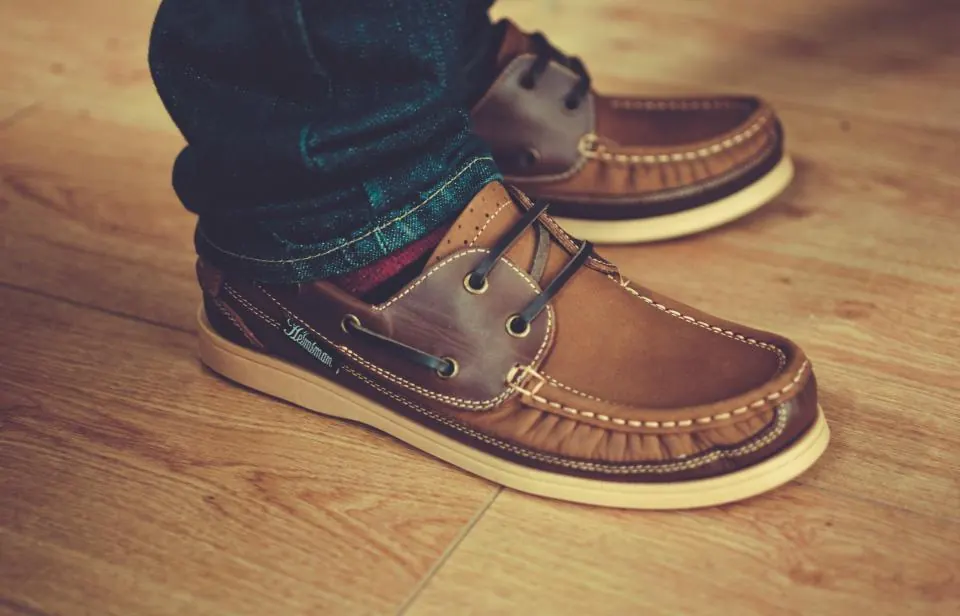
Pull swatches from the actual shoes and build outward. Tan and white two-tones pair with light gray or cream suits; cognac leathers sit well with navy. Choose locations whose walls and floors support those tones rather than fight them. In Los Angeles, the pastel facades of older Westwood buildings or the stone and tile of historic Broadway interiors can carry a spring palette.
Make a mood board that shows the palette in context, with fabric swatches, location references and shoe photos together. It aligns the stylist, the location scout and the client before anyone spends money.
A two-tone shoe is already loud, so the rest of the frame should speak in a clear, calm voice.
Styling suits with two-tone shoes
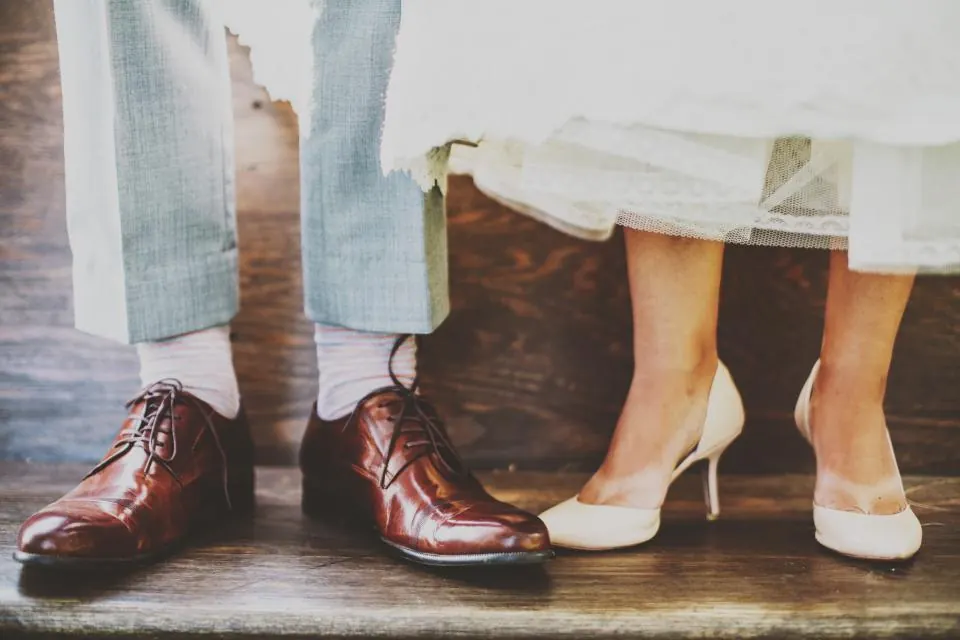
Two-tone shoes are statement pieces, and styling should give them room. Keep suits solid or with subtle texture, and let trousers break slightly so the shoe shows. A cropped, no-break trouser makes the most of a bold spectator. Spectator styles with contrasting toe caps and heels benefit from clean, uncluttered floors that keep the outline sharp.
Socks matter in every frame. Decide on a sock strategy for the campaign, whether matching trousers, contrasting color or no-show, and keep it consistent. Bring tailor's clips and a steamer; wrinkles at the ankle are visible in every on-foot shot.
Accessories should support the shoes rather than compete with them. A pocket square that echoes the shoe's lighter tone, a belt that matches the leather and a simple watch keep the eye moving toward the feet.
Shooting the day
Use natural light where possible, with a reflector and a single strobe through a softbox for control. An 85mm for full-length frames and a 100mm macro for details covers most needs. Shoot product stills in a corner of the location under consistent light so they match the lookbook.
Movement keeps the campaign from feeling stiff. Have models walk, step off a curb or climb stairs; mid-stride frames show the shoe from angles a static pose cannot. Stacy Adams photography in this style leans into swagger, so encourage confident posture.
Keep a schedule with buffer time for wardrobe changes and resets. On a busy campaign day, falling behind early means rushing the last looks, which are often the ones the brand cares about most.
Delivery
Organize selects by look, with each look's full-length, detail and product frame together. Retouch for consistent color across the set, since a tan shoe that shifts between frames confuses buyers.
Deliver horizontal and vertical crops of key frames for print, web and social, and a contact sheet that maps each image to its style number.
Include a short note on lighting setups and locations with the delivery. When the brand plans the next season, that record makes it far easier to match the look or deliberately move away from it.