Photographing Stacy Adams Shoes and Classic Men's Footwear
Stacy Adams shoes are a familiar name in classic men's dress footwear. Here is how dress shoes like them are lit, styled and shot, both as product and on foot.
The dress shoe challenge
Stacy Adams shoes belong to a tradition of classic men's dress footwear: wingtips, cap toes, loafers and bold two-tones. Photographing that kind of product is a specific craft, because polished leather is one of the most reflective surfaces a product photographer deals with.
The goal is to show shape, stitching and finish without blowing out highlights or losing detail in dark leathers. Every light in the room can appear on a toe cap, so the setup has to be deliberate.
Bold styles add another layer. Two-tone shoes combine materials with different reflectance, like white leather beside dark brown, and a single exposure has to hold detail in both. Bracketing and careful light placement matter more than usual.
Lighting leather
Large, soft sources work best. A big softbox or scrim placed above and slightly behind the shoe creates a long, even highlight along the vamp and toe that describes the curve. A second softer light from the front fills the side panel and shows brogueing and stitching. Keep the main light large relative to the shoe; a 4x6-foot scrim a few feet away behaves very differently from a small box at the same distance.
Black leather needs more fill than you think; brown and oxblood need less. Use black cards to add definition to edges, and white cards to lift the inside of the shoe. A polarizer on the lens can tame glare, though some shine is part of the appeal.
Shoot tethered and zoom in on the toe. Small adjustments of a few inches change the highlight shape dramatically.
A polished toe cap is a mirror with laces, so you light the room it reflects as carefully as the shoe itself.
Product angles
Standard dress shoe coverage includes the side profile, the three-quarter front, a top-down view, the heel and the sole. Keep camera height consistent across a collection so shoes line up on a product page. A 100mm macro at f/11 to f/16, or focus stacking at f/8, keeps the whole shoe sharp.
Prep matters as much as lighting. Insert shoe trees, polish and buff, wipe soles, straighten laces and remove any stickers. A few minutes with a soft cloth saves an hour of retouching. Lint-free gloves keep fingerprints off freshly buffed leather, and a soft brush removes dust that the camera will find even when the eye does not.
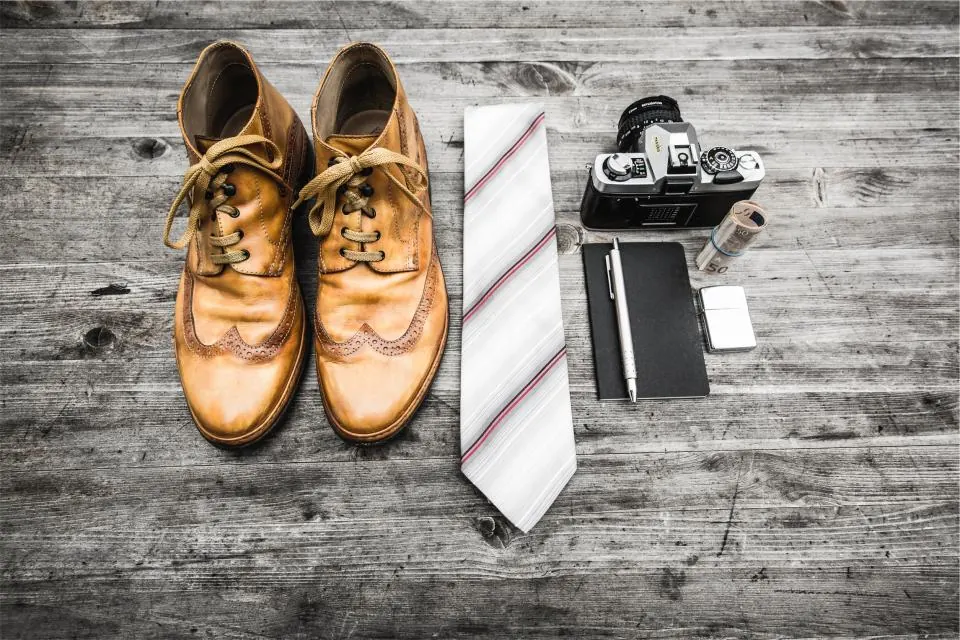
Background choice depends on use. Pure white is standard for e-commerce, but a soft gray or a textured surface like wood or concrete can suit catalog and editorial pages. Keep a few surfaces on hand and decide with the client before the shoot.
On foot and in context
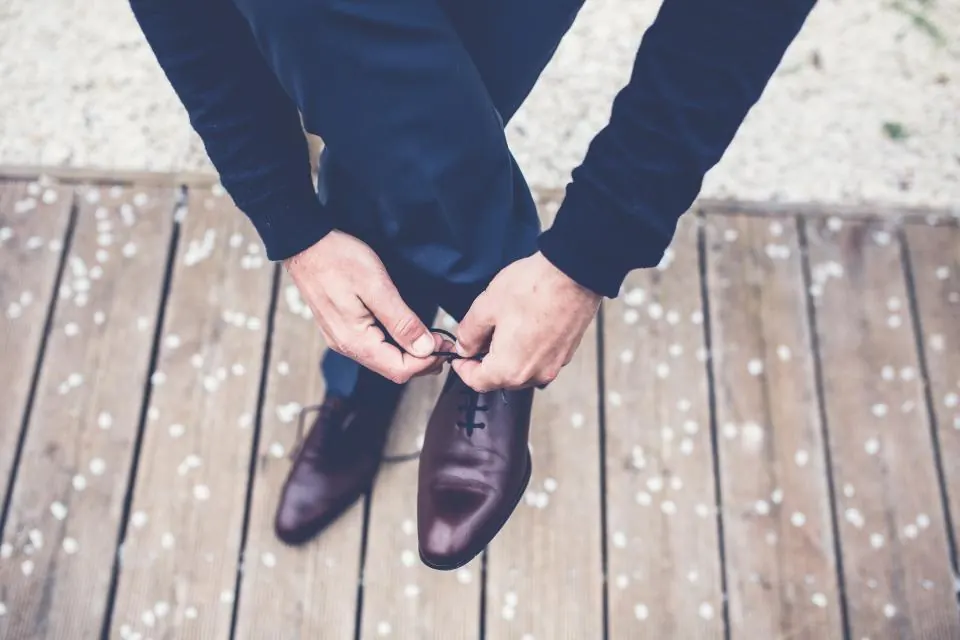
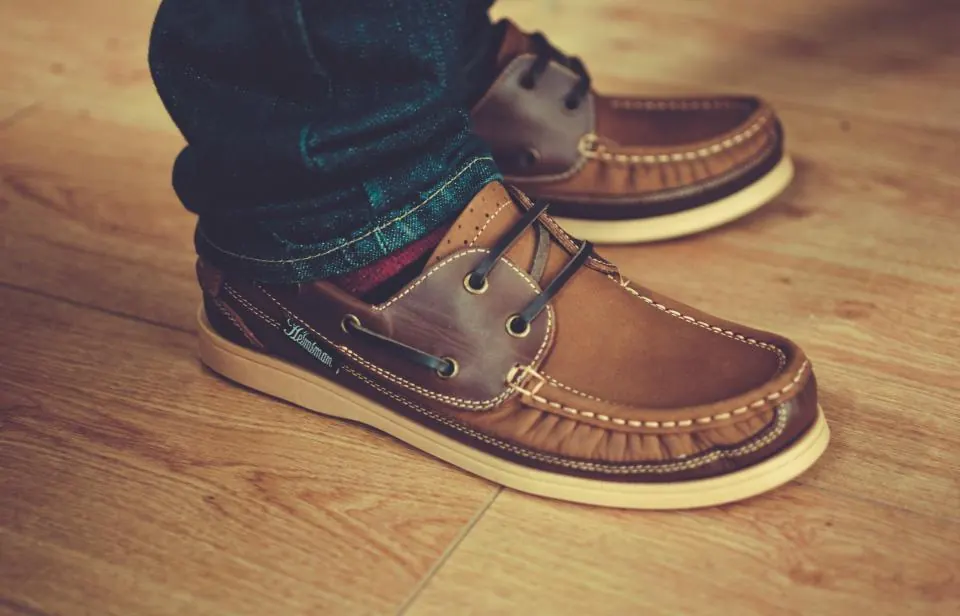
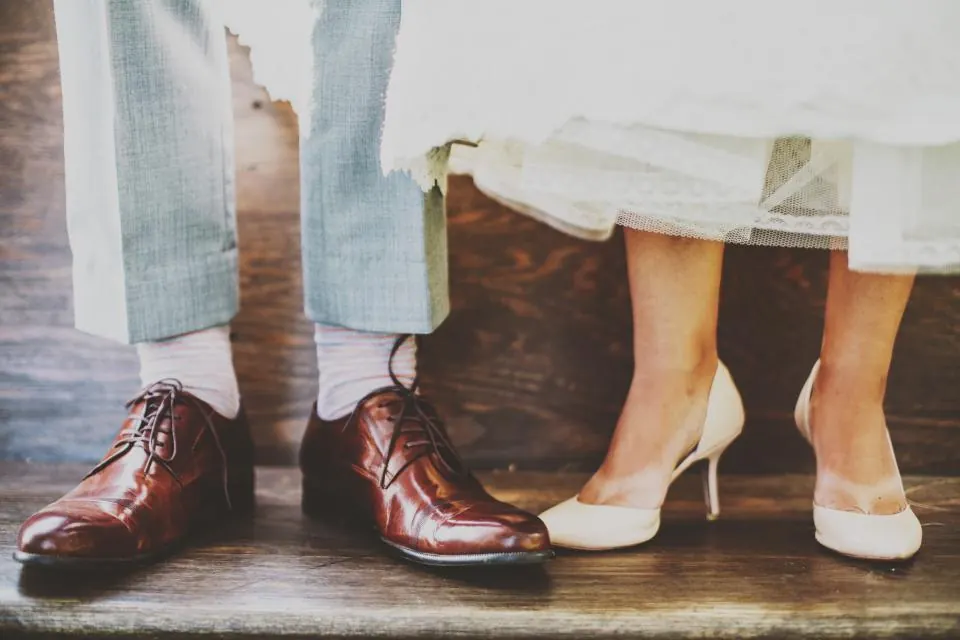
On-foot images show how a shoe sits with a trouser break and a sock. Shoot at ankle height with a 50mm or 85mm, and style trousers to fall cleanly. Classic dress shoes look at home on the tile of a Downtown lobby, the old-theater facades along Broadway or a quiet Westwood street.
For lifestyle frames, consider the whole outfit. Two-tone and bold-colored shoes pair with simple suits; classic black oxfords suit sharper tailoring. Stacy Adams shoes in particular are often styled with confident, dressy looks, so the location should match that energy.
Shoes on foot also have to look comfortable. A model shifting weight to one leg, or standing slightly turned, gives the shoe a natural line. Ask for a few walking frames too; a classic dress shoe in mid-stride often looks more confident than one standing still.
Editing and delivery
Retouch for cleanliness, not perfection: remove dust, creases from try-ons and stray reflections, but keep the texture of the leather. Match colors carefully to physical samples under a daylight-balanced viewing light. Check the soles too; a scuffed or dirty sole is easy to miss on set and tedious to fix later.
Deliver product frames on a consistent background, plus on-foot and lifestyle selects. Online retailers need clean silhouettes; campaigns need mood.
Keep the full set consistent in camera height, background tone and shadow placement, so a customer browsing a whole collection sees the differences between shoes rather than differences between setups.