Nike SB Photography: How Skate Shoes Get Shot in Los Angeles
Nike SB photography set a template for skate footwear imagery: real skating, real wear, real spots. Here is how that kind of shoot is planned and lit in LA.
What the style actually is
When people talk about Nike SB photography they usually mean a look rather than a rulebook: skate shoes shown doing the job they were built for, on a skater who can actually skate, at a spot that other skaters would recognize. The product matters, but it is never presented as if it lives in a vacuum.
That approach sits between two worlds. Footwear marketing wants the silhouette, colorway and logo legible. Skate culture wants authenticity, which means grip tape scuffs, frayed laces and a trick that really landed. A good skate shoe shoot respects both without pretending one of them does not exist.
It also means casting for skill first. A rider who can land the same trick five times gives you options on angle and light; a model on a board gives you none. Most skate footwear crews build the day around what the skater wants to skate and fit the product needs around that.
On the board: action frames that still sell the shoe
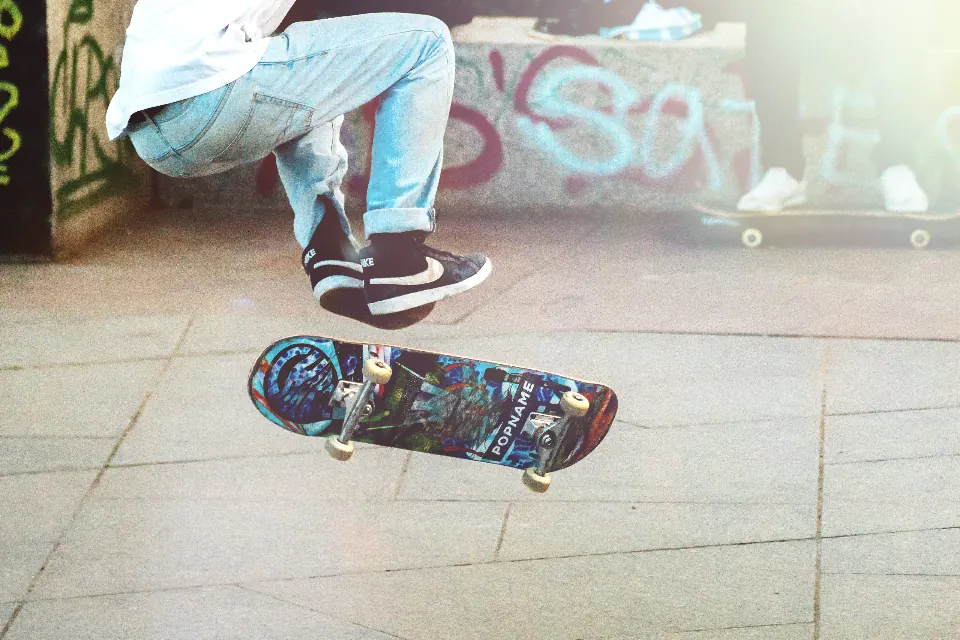
The classic on-board shot is a fisheye at close range, low to the ground, with the shoe filling a third of the frame at the peak of a flip trick. A 15mm full-frame fisheye or an 8mm on a crop body lets you stay within arm’s length of the board while keeping the skater, the spot and the sky in one picture.
Flash does the heavy lifting. One or two speedlights or a battery strobe on a stand, fired off-camera at around 1/4 power, freeze the board and give the suede or canvas texture that ambient light cannot. Sync speed caps you at 1/200s or 1/250s on most bodies, so expose the background a stop under and let the flash carry the shoe.
Long-lens frames from across the street are the other half of the set. A 70-200mm at f/4 compresses a ledge or handrail and isolates the feet, which is useful when the art director needs a clean read on the outsole flick or the toe cap wear.
A skate shoe photo is only believable if the shoe looks like it has already earned its scuffs.
Off the board: product that still feels skated
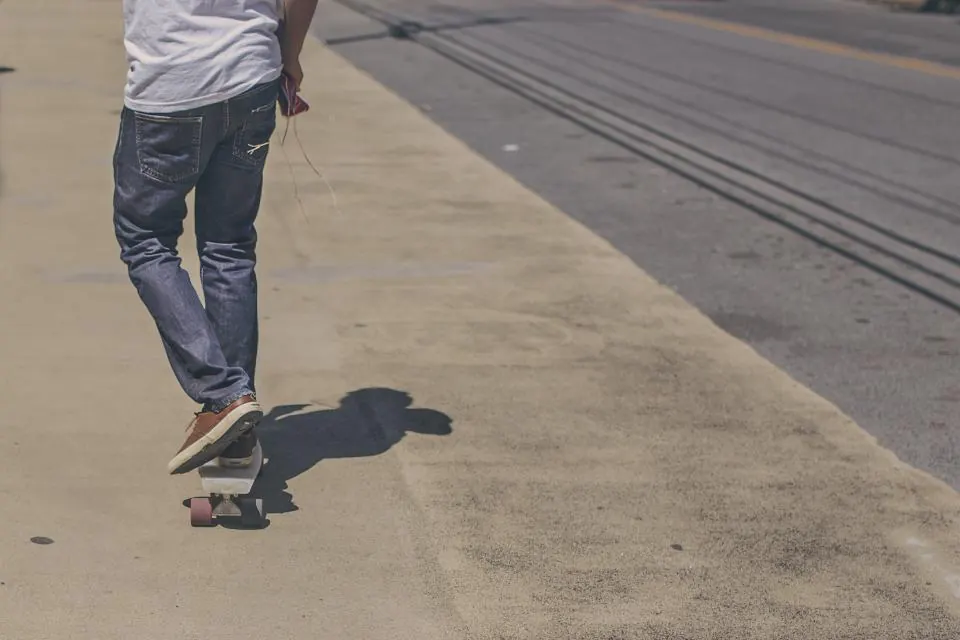
Off-board product frames work best when they look like a break between tries. Shoes sitting on a curb in the Arts District, kicked off on a bench at Venice, or resting on a board with chalk and wax on the deck all say more than a white sweep.
Light those like small still lifes. A single strobe through a strip box at a low angle rakes across suede and shows nap direction; a reflector on the opposite side keeps the midsole from going muddy. A polarizer on the lens cuts sheen off rubber and leather toe caps.
Working the LA spots
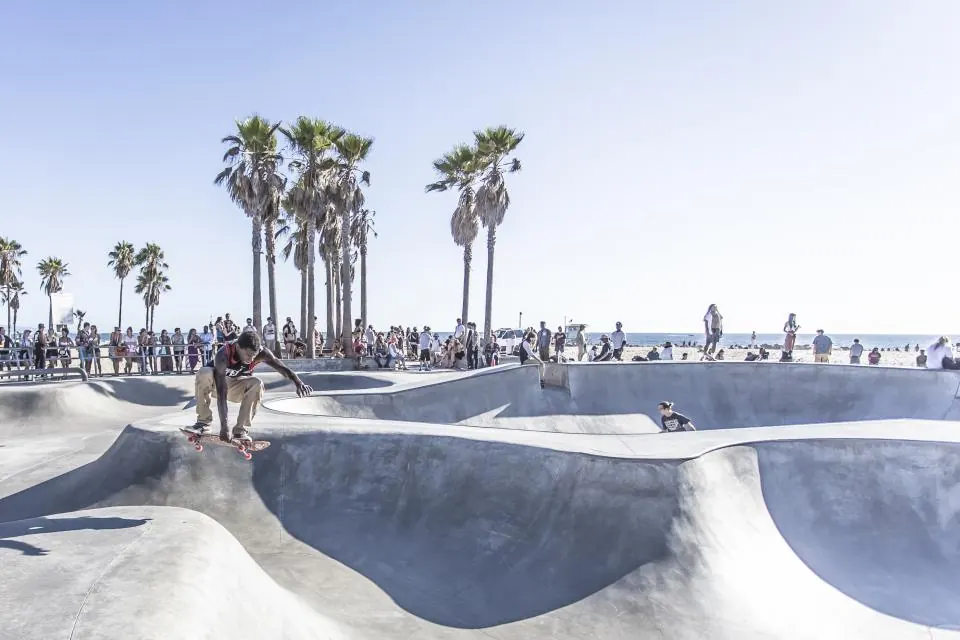
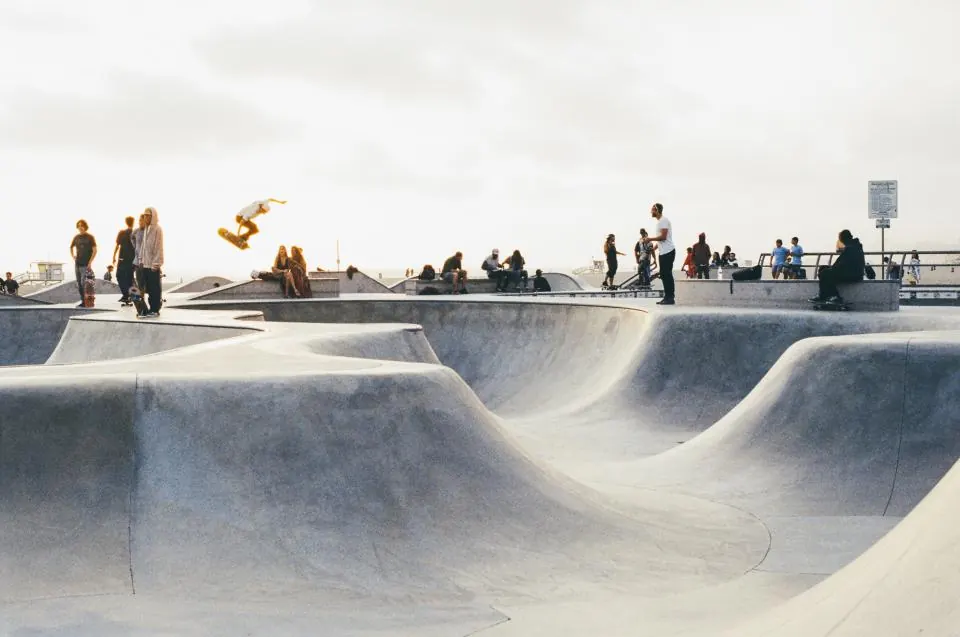
Los Angeles gives a footwear crew range within a short drive. Venice Skatepark offers ocean light and crowds; Downtown’s plazas and ledges give hard architecture; the LA River banks provide long smooth concrete for lines. Each one changes how a colorway reads, so match the spot to the palette before you load the van.
Permits and security are part of the job. Some locations are tolerant of a skater and a single photographer but not of light stands and a team, so scale the kit to the spot and have a backup location ready. Early mornings mean fewer people, softer light and less friction.
Weather in LA is rarely the problem, but wind and glare are. Afternoon onshore breezes kick sand onto the Venice bowls, and low winter sun can flare straight down a Downtown street. A lens hood, a flag on a stand and a can of compressed air solve most of it.
Editing and delivery
Edit for the trick first and the shoe second, then check that the hero frame works for both. Skate brands tend to prefer a restrained grade: honest color, a bit of grain and no heavy retouching of wear. Nike SB photography in particular has always let shoes look used.
Deliver a mix: one or two hero action frames, a sequence for social, tight detail crops and a few clean product shots on location. That spread lets the same shoot feed a catalog, a team rider post and a shop window without reshooting.