UCLA Water Polo Photography: Shooting the Sport From the Deck
UCLA water polo is a contact sport played mostly underwater, which makes it one of the hardest to photograph. How to get the shot from the deck and below the surface.
Why water polo is hard to shoot
UCLA water polo is a good case study in a sport that hides most of its action. The game happens under the surface: legs eggbeating, grabbing, holding position. Above the water you get heads, arms and the ball. The photographer's job is to find the few moments when the struggle breaks the surface.
Those moments are predictable once you watch a few possessions. A shooter rising out of the water with the ball cocked behind the head. A goalie lunging with both arms high. Two players fighting for position at two meters. Learn the rhythm of the shot clock and you will know when to be ready.
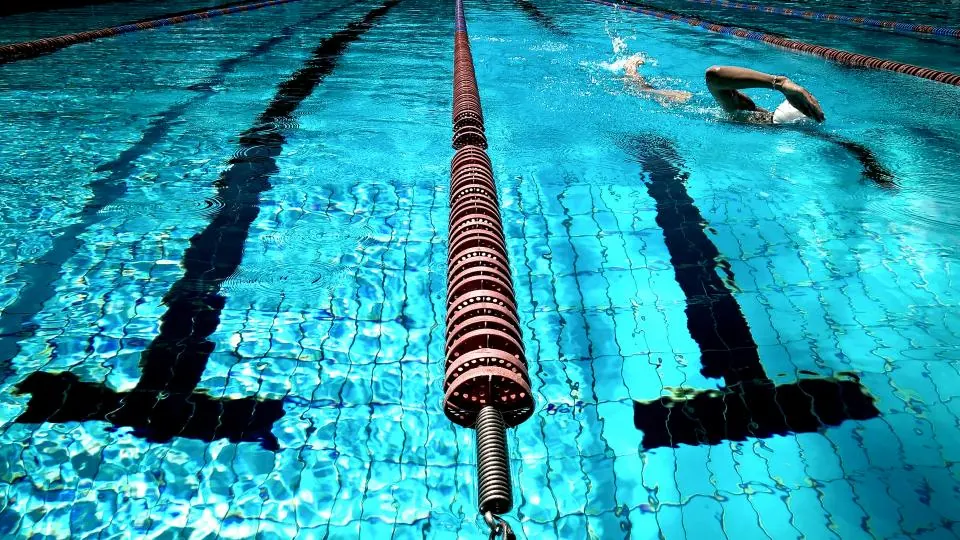
Spieker Aquatics Center on the UCLA campus in Westwood is an outdoor pool, which means daylight, hard sun on afternoon games and changing color as the evening comes on. Check the start time and think about where the sun will be before you choose a side. A late-afternoon start often puts glare straight into the lens from one end of the pool.
Angles from the pool deck
Get low. Shooting from a standing position looks down on the players and flattens them into the water. Kneeling or lying flat on the deck, where officials allow it, puts the lens near water level and makes a rising shooter look like they are coming out of the frame.
Long glass does most of the work. A 300mm f/2.8 or a 100-400mm covers the far side of the pool and the goal at the opposite end. Position behind the goal line, off to one side, gives you shooters facing you and the goalie in profile. A second body with a 70-200mm handles action near your end.
Respect the deck. Stay out of the referees' lanes, keep gear bags away from the edge and ask the sports information staff where photographers are allowed before you set up. Wet concrete and expensive lenses do not mix, so bring a towel and a mat.
Half the game happens underwater. The picture is the instant the struggle breaks the surface.
Freezing the splash
Water polo needs fast shutter speeds: 1/1600s minimum to freeze arms, 1/2500s or faster to render individual droplets as sharp beads. In midday sun that is easy at f/4 and ISO 400. At dusk under pool lights, accept some noise and push ISO rather than dropping your shutter speed.
Shoot in short bursts timed to the release, not continuous spray. The best frame is usually the instant the ball leaves the hand, with water still streaming off the arm. A polarizer can cut glare off the surface and show some of the legwork below, but it costs a stop and a half, so use it only in bright light.
Expose for the faces. White caps and bright water fool meters into underexposing skin. Dial in minus a third or set exposure manually off a player's face and leave it.
When to go underwater
Underwater images show the half of the game spectators never see, and they are what make water polo pictures memorable. A dedicated housing for a mirrorless body with a dome port and a wide lens, 14mm to 24mm, is the standard tool. A remote camera on a pole or weighted mount below the goal is another option during practice.
Underwater work almost always happens during training, not games, and only with the coaching staff's permission. Schedule it, brief the players, and keep the session short. Natural light from above is often enough in an outdoor pool on a sunny day; add a strobe only if you are close and working at practice pace.
Mix the two views in your edit. A tight sequence of a shooter from the deck paired with the same kind of moment from below tells the full story of UCLA water polo, or any program, better than either angle on its own.