Dodgers Magazine-Style Portraits Behind the Scenes at the Stadium
A Dodgers magazine feature on the people who run a baseball team means photographing executives, scouts and staff in stadium spaces fans rarely see, in Chavez Ravine's famous light.
Photographing the people behind the team
A lifestyle magazine story about baseball operations, the kind of piece a California title or a Dodgers magazine might run, has an unusual brief: make compelling portraits of people who aren't athletes and don't spend their careers in front of cameras. Scouts, analysts and front-office staff are often more comfortable on a laptop than on a field.
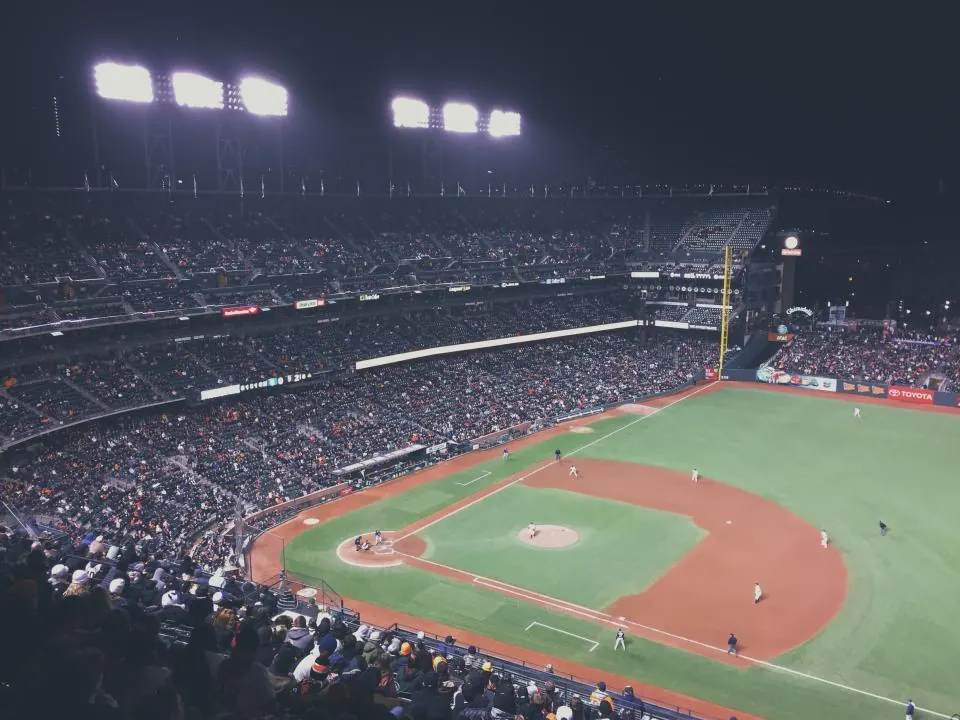
The setting does a lot of the work. Dodger Stadium, built in Chavez Ravine and opened in 1962, has some of the most recognizable architecture in sport: the wavy outfield pavilion roofs, the hexagonal scoreboards, the pastel seats rising in tiers. Even a tight portrait reads as baseball if a piece of that design is in the frame.
Stadium light and timing
Scout the sun's path for your time slot. In the late afternoon, positions in the stands can put the low sun behind your subject with the field glowing in the background, which is the classic ballpark portrait. Fill with a large reflector or a strobe in a 3-foot octabox to hold the face.
Timing depends on access. Before a home game, the field is busy with batting practice and grounds crew; on an off day, it's quiet but the lights are off. Ask the club's communications staff when there's a window, and plan each setup to take ten minutes or less.
Have a bad-weather and bad-light plan. If a marine layer flattens the sky or the field is closed, move indoors to the concourses or club spaces, where the mid-century details, railings and signage still say ballpark. A portable strobe makes those interiors usable in minutes.
The people who build a team rarely stand on the field. Bring them into the ballpark's light and the story tells itself.
Behind-the-scenes spaces
Front-office stories are best told in the places the work happens: a scouting room lined with whiteboards, a dugout tunnel, the empty press box, a draft room table. These spaces are usually lit by flat fluorescents, so bring a portable strobe and a gridded softbox to carve out the subject and let the room go slightly darker.
Ask before photographing whiteboards, screens or documents. Scouting information is confidential, and anything readable in the frame may need to be removed or shot out of focus.
Props help non-athletes relax: a radar gun, a stopwatch, a clipboard of notes, a well-worn glove. Holding something gives the hands a job.
Access, credentials and logistics
Professional ballparks are tightly controlled spaces. Every member of the crew will need a credential, the club will specify where you can and can't go, and an escort from the communications staff usually stays with the shoot. Send a list of names, gear and preferred locations well ahead of the date.
Pack light enough to move quickly through tunnels, elevators and concourses. A battery strobe, a collapsible octabox, two stands with sandbags, a reflector, and two bodies with a 35mm and a 70-200mm cover almost everything. Rolling carts are welcome on concourses but not always on the field, so check before you plan around one.
Keep logos and marks in mind. A magazine feature can show the ballpark and uniforms as part of reporting, but commercial use is a different matter, and the club's own rules will apply to how the images are used. Clarify with the editor and the club before the shoot, so a Dodgers magazine-style story runs without any surprises in licensing or approvals.
Directing people who aren't athletes
Executives often expect a corporate headshot and stiffen accordingly. Talk about their work while you shoot; questions about how they first got into baseball tend to bring out real expressions. Use a 50mm or 85mm and keep the camera at eye level for a direct, respectful look.
For the final edit in a Dodgers magazine-style feature, mix tight portraits with wider environmental frames and a few quiet details of the stadium. The goal is to show that the club is a workplace as well as a ballpark.
Shoot more than one expression. Some subjects will want a serious, authoritative frame for the magazine, others a relaxed smile. Offer both and let the editor choose.