Fashion Editorial Photography: How a Shoot Is Actually Produced
Fashion editorial photography is the part of the business that people picture when they hear the word photographer, and it is also the part that is least like the picture. A twelve-page story in a magazine is roughly two weeks of production and one day of shooting. This is a walk through those two weeks, written from the production side, because the production is where editorials are won.
I am going to use a generic Los Angeles magazine story as the example: eight to twelve images, a studio day with one location move, a crew of six to eight. The scale changes with the budget. The sequence does not.
The brief
An editorial begins with a pitch or an assignment. Either the photographer brings a concept to an editor, or the fashion director assigns a story with a theme, a season and a page count. In both cases the first deliverable is not a photograph; it is a reference deck. Ten to twenty images, a palette, a note on location and light, a sentence on the mood. The deck is how the editor, the stylist and the photographer agree on something before money is spent.
The deck also sets the technical approach. If the references are all natural window light, the lighting plan follows. If they are hard flash on white, that is a different day with different gear. Settling this early prevents the most expensive problem on set, which is three people with three different pictures in their heads.
Casting
The stylist and the photographer usually cast together, with the editor approving. Casting is done from agency packages, which are digital cards from the modeling agencies, and then from a short list of options. In Los Angeles most editorials cast from two or three agencies and see options within a day.
What matters at this stage is less the face than how the model moves and whether the agency will release them for the rate. Editorial rates are low; the trade is tear sheets and exposure. Hair and makeup are cast the same way, through agencies, and the best ones are booked weeks out.
A note on scale: a shoot built around a single athlete or musician, like the Nylon story in the journal, inverts this process. The subject is fixed and everything else is cast around them.
Styling and pulls
The stylist pulls clothes from showrooms and PR agencies against the reference deck and the page count. Pulls are the invisible cost of editorial. Each look needs alternates, the clothes need to be returned in perfect condition, and a showroom will only release pieces to stylists with a track record and a publication behind them.
For the photographer, the practical questions are how many looks there are, which ones are the opener and the closer, and whether any look has a technical demand: a sequin that will flare under flash, a white dress that will blow out on white, a pattern that moiré will eat. Knowing the looks before the shoot day means the lighting is already solved when the model walks onto the set.
Location and permits
Studio days are simple. A rental studio with a cyc wall, a kitchen and parking, booked for ten hours with an overtime rate in writing. Location days are not simple. Los Angeles requires film permits for most commercial photography on public property, and private locations need an agreement, insurance and often a site representative. The producer handles this, or on smaller editorials, the photographer does.
The lighting plan for a location follows the sun. For a morning call at a west-facing beach, the first hour is soft and the last hour is harsh, and the schedule is built backwards from that. The vintage eyewear campaign was planned entirely around a two-hour window of light on a street that is unusable at noon.
The crew
A typical editorial crew: photographer, first assistant, digital tech, stylist, stylist assistant, hair, makeup, and sometimes a producer. On a bigger story add a second assistant, a manicurist and a set designer. Everyone has a call time, a rate and a role, and the photographer is responsible for all of them running on time.
The digital tech is the most underrated role. They run the capture, build the selects as the day goes, and are the second set of eyes on focus and exposure. A good tech means the photographer looks at the model, not the screen.
The shoot day
Call time is usually two hours before the first frame. Hair and makeup take the first ninety minutes. The photographer and assistant use that time to build the set and test the lighting on a stand-in. Breakfast is on the production.
Then it is look by look. Each look gets twenty to forty minutes. The stylist dresses the model, the photographer shoots a test, the tech checks it, then the real frames. Most editorials shoot two or three hundred frames per look and use one. The pace is steady, not frantic. Rushing produces pictures that look rushed.
Lunch is a hard break, by union convention even when no one is union. The afternoon looks are the ones that need the most energy, so the schedule puts the simplest look right after lunch and the hero look an hour later.
Lighting, briefly
Editorial lighting is a long subject, but the production decision is a short one: match the references. If the deck is soft daylight, use big sources close to the subject and let the shadows fall where they fall. If it is hard flash, one bare head, a reflector, and a background far enough away to go dark. Mixed days, where the opener is one and the closer is the other, are common and are why the deck has to be settled first.
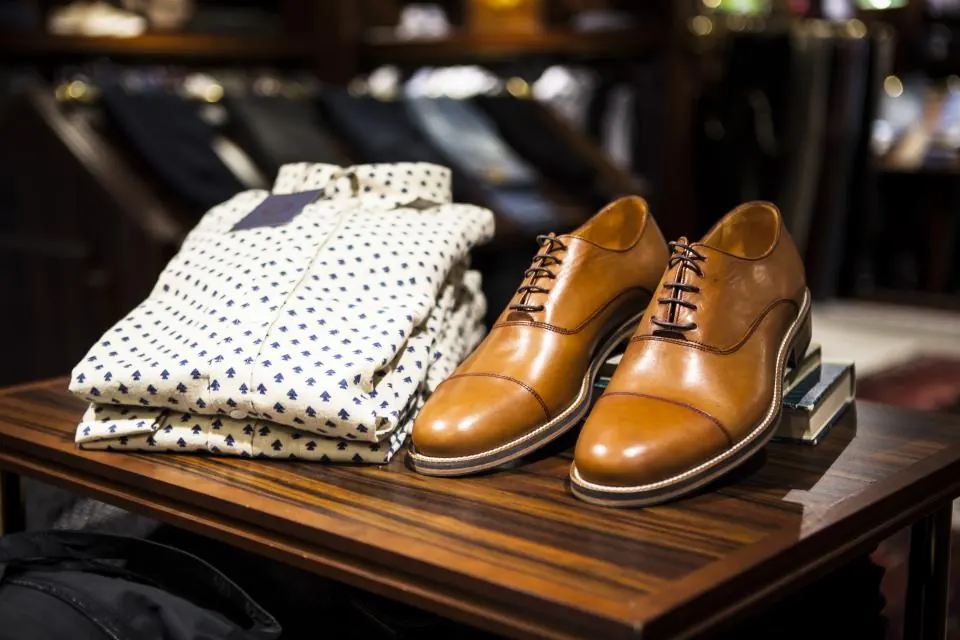
The Nunn Bush shoe story and the Florsheim lookbook in the journal are product-led rather than fashion-led, but the lighting logic is identical: decide the surface you want and light for it.
Selects, retouching and delivery
The tech delivers a contact sheet of selects the same night. The photographer narrows it to two or three per look, the editor and stylist weigh in, and a final set is chosen within a day or two. Retouching is usually a specialist, billed per image, with a brief that says what to do and what to leave alone. Skin should still look like skin.
Delivery to the magazine is high-resolution TIFF or layered PSD files with the credits sheet: model, agency, hair, makeup, styling, every garment with brand and price. The credits sheet is as much a deliverable as the images, and getting it wrong costs the stylist their next pull.
Rights and what the photographer keeps
In editorial, the photographer typically keeps copyright and licenses the images to the publication for first use, with an exclusivity window of a few months. After that the images can be used in the photographer's portfolio and sometimes licensed elsewhere. This is worth reading in the contract every time, because the trend is toward broader grabs. The American Society of Media Photographers publishes clear guidance on licensing and rights that is a good baseline for anyone negotiating their first editorial.
Why the production is the work
A fashion editorial is a page count, a date and a budget before it is an image. The pictures that look effortless are the ones where the deck was agreed, the cast was right, the clothes were solved in advance and the light was planned around the clock. Shooting is the last and shortest step. Everything in this journal, from sport to footwear, is built the same way, and the method is the only part that transfers from job to job.