Designer at Home: Portraits in the Spirit of Waldo Fernandez
Profiling an interior designer like Waldo Fernandez, a Los Angeles interior designer, means photographing a person and their rooms at once, for a luxury city magazine that cares about both.
A portrait that's also an interior
When a city luxury magazine profiles an interior designer, the photographs have two subjects: the person and the space they made. A story on someone like Waldo Fernandez, a Los Angeles interior designer, would need to show the rooms well enough for design readers while still giving a strong sense of who the designer is.
That changes the approach. A pure interiors shoot is often empty of people, long exposures on a tripod at f/8 to f/11. A pure portrait would throw the room out of focus. The designer profile sits in between: wide enough to read the architecture, close enough to read a face.
Lens choice follows from that balance. A 24mm or 28mm lets you place the designer in the middle ground of a room with architecture around them, while staying far enough back that the furniture doesn't distort. Keep the camera level and at chest height so the room's lines stay calm.
Working with the space
Walk the home or studio with the designer before setting up. Ask which rooms or objects matter most to them, and why. Their answers will shape the shot list and give you something to talk about while shooting, which helps relax a subject who's more used to being behind the scenes.
Respect the styling. A designer's space is arranged with intent, so move nothing without asking, photograph a reference of anything you shift, and put it back exactly. Bring gloves, felt pads for stands and a soft brush for dust.
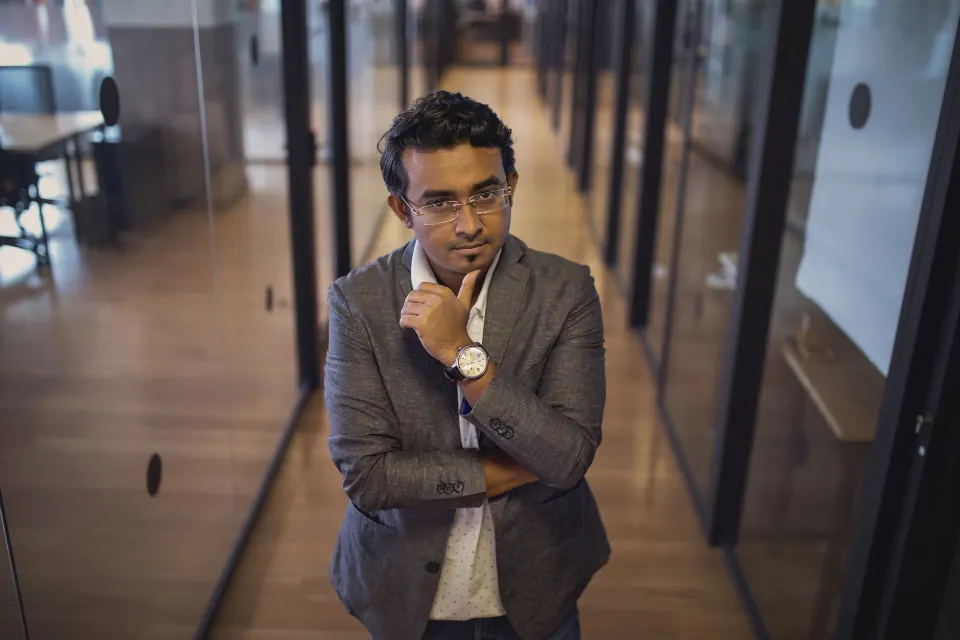
Use the lines of the room. Doorways, mantels and windows make natural frames for a seated or standing figure, and a symmetrical composition suits the order most designers build into their interiors.
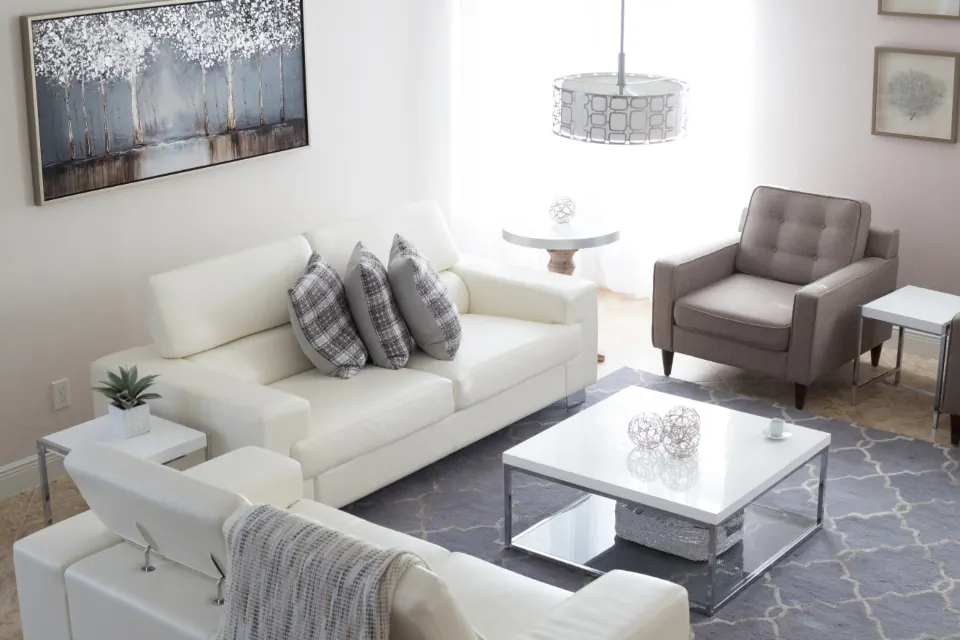
In a designer's home, every object is already placed with intent. Photograph the room as if it's the second person in the portrait.
Light that flatters both
Most well-designed Los Angeles homes have generous windows, and the best plan is often to work with them. Shoot in the hours when sun isn't striking the floor directly, then balance the exterior view with a soft, low-power strobe bounced off a ceiling or wall so the room doesn't fall dark behind the subject.
Keep color temperature consistent. Turn off mismatched lamps or gel them to match daylight, unless a warm practical light is part of the mood you want. A tilt-shift lens, such as a 24mm, keeps verticals straight in wide frames without heavy correction later.
For tighter portraits, a 50mm or 85mm at f/2.8 keeps the room recognizable but soft.
Kit and crew for interiors with people
A designer profile needs a slightly different kit from a straight portrait. Bring a sturdy tripod with a geared head for interiors, a tilt-shift lens, a fast portrait lens, two battery strobes with large soft modifiers and a set of flags. Black wrap and small clamps help control light on reflective surfaces like lacquer, marble and glass.
Keep the crew small. An assistant and a digital tech are usually enough, and fewer people means less risk to delicate furniture and floors. Agree with the designer's office who will be on site, where equipment can be staged and which surfaces are off limits.
Many interiors photographers shoot a few frames at different exposures for each wide view, then blend them so both the window view and the darkest corner hold detail. When a person is in the frame, keep their exposure in a single frame and blend only the room around them, so the face never looks composited. In a profile of a designer like Waldo Fernandez, that kind of care is what design readers notice.
Planning the story
A luxury city magazine will usually want an opener of the designer in their best room, several pure interiors, and a few details: material samples, a favorite chair, drawings on a work table. Shoot extra verticals for single pages and leave space for headlines.
Agree in advance with the designer's office which rooms and clients may be shown. For a Waldo Fernandez-style profile, private homes may be off limits, so the designer's studio or own home is often where the story comes together.