Loft Photoshoot Locations and How to Light Big Windows
Planning a loft photoshoot: how to scout and book a loft, what the big windows give you and take away, exposing for a subject against bright glass, balancing strobe with daylight, and a shot list that uses the whole space.
A loft photoshoot is the most requested location brief in Los Angeles after the beach, and for a reason: concrete floors, high ceilings, a wall of industrial windows and a room that photographs like a set without being one. It is also the location that produces the most disappointing files for photographers who have not shot one before, because the thing that makes a loft beautiful, the wall of glass, is the thing that fights the camera. The windows are ten times brighter than the room. The subject stands in front of them and becomes a silhouette, or the subject is exposed and the windows become white holes, or the whole frame is a muddy compromise. This guide covers how to find and book a loft, what the windows do, and the three ways to light a subject against them so you get the loft and the person in the same frame.
Finding a loft
Lofts in Los Angeles cluster in the Arts District, downtown around the Fashion District and Historic Core, Frogtown along the river, and the older industrial blocks of Culver City and Inglewood. Three ways to book:
- Location marketplaces. Hourly rental platforms list hundreds of lofts with photographs and rates, typically 75 to 300 dollars an hour for a production of under ten people, more for larger crews and for full days. Read the photographs for window orientation and ceiling height, not for the furniture.
- Studio lofts. Several downtown buildings rent their upper floors as daylight studios with a cyclorama in one corner and raw loft space in the rest. These come with power, a freight elevator and a manager who knows where the breaker panel is. For a production day they are worth the premium.
- Direct. Artists' lofts and small businesses will sometimes rent for a day. Expect to carry insurance, pay a cleaning fee and work around their stuff.
Scout in person at the hour you plan to shoot. A loft with east-facing windows is a different room at 9 a.m. and 4 p.m. Note the window orientation, the ceiling height, the floor material (polished concrete bounces light up; dark wood does not), the power (how many circuits, where), the elevator size if you are bringing a rolling rack of wardrobe and a dozen stands, and the parking. The fashion editorial production guide has the scouting checklist we use.
What big windows give you
A north-facing wall of windows is the largest, softest light source you will ever use for free. It is a 30-foot softbox. For portraits and lookbook work with the subject near the glass and turned so the window lights the far side of the face, as in the short-light setup from the portrait lighting post, you need nothing else but a reflector.
East and west windows give you direct sun for two or three hours a day, which is hard, graphic light with long shadows across the floor: beautiful for fashion, impossible to control for more than an hour as it moves. South windows give high, bright light most of the day that is harsh at noon and softens toward evening.
Overcast days turn every window into north light and are the easiest loft days of all.
What big windows take away
Dynamic range. A subject lit by window light at the window will be exposed correctly while the window itself is five to seven stops brighter, so the glass clips to white. Move the subject into the room and the window stays white while the subject goes dark. The eye handles this; the sensor does not. Every loft lighting decision is about closing that gap or choosing which side of it to live on.
Three ways to shoot against the glass
1. Let the windows go white
The simplest choice and the most common editorial look: expose for the subject, let the windows blow out to pure white, and treat them as a bright backdrop with the window frames as graphic lines. It works when the view outside is not the point (a brick wall across the alley, a parking lot). Watch for flare: a lens hood and a flag above the lens keep contrast. Meter the subject's face with an incident meter, set the camera there, and check that the window frames still read as dark lines against the white. If they disappear, the windows are too far gone; pull the subject closer to the glass so the gap narrows.
2. Expose for the windows and light the subject with strobe
The production approach. Expose the camera so the windows and the city or sky outside hold detail (typically two to three stops under what the subject would need), then bring the subject up to that exposure with strobe. A large softbox or octabox at the same angle as the window light, feathered so it looks like the window did it, is the natural choice; a bare head bounced off a white V-flat for a broader, softer fill is the alternative. Power is the constraint: matching midday window light from a few feet away needs 400 to 1,000 watt-seconds through a softbox. Shutter at sync speed to kill as much ambient as possible, or use high-speed sync to shoot wide open.
The tell of this approach done badly is a subject lit from a direction the window would never light from. Put the strobe on the window side and let the far side of the face fall into the room's shadow. The white backdrop lighting ratios post explains the two-stop logic, which is the same here in reverse: the background is bright, so the subject needs help to match it.
3. Cut the windows down
Scrims and neutral density gels on the glass reduce the window light by one to three stops without changing its quality. A 12-by-12 frame with half-stop or full-stop silk stood inside the window, or ND gel taped to the panes you will have in frame, brings the windows into range so the subject can be exposed with the window at a believable brightness. This is how the loft advertising shoots that look "all natural light" are actually made. It takes a crew and time, and it is the right answer when the view out of the windows is part of the picture.
Balancing color
Window light is around 5,500 to 6,500 kelvin and shifts blue in shade and on overcast days. Strobe is 5,500. The loft's own fixtures are usually warm (2,700 to 3,000) and will put an orange cast into anything they touch. Turn them off. If you must mix, gel the strobe with a quarter CTO to warm it toward the room, or gel the windows with CTO if you are cutting them anyway. Set a custom white balance off a gray card in the subject's light and leave it alone for the setup.
A loft shot list that uses the space
Lofts offer four kinds of picture, and a good day gets all four:
- Against the glass. Full length, subject near the window, window as backdrop, approach one or two above.
- In the room. Subject away from the windows, lit by the window from the side, the depth of the loft behind them falling off into shadow. The most "loft" of the four.
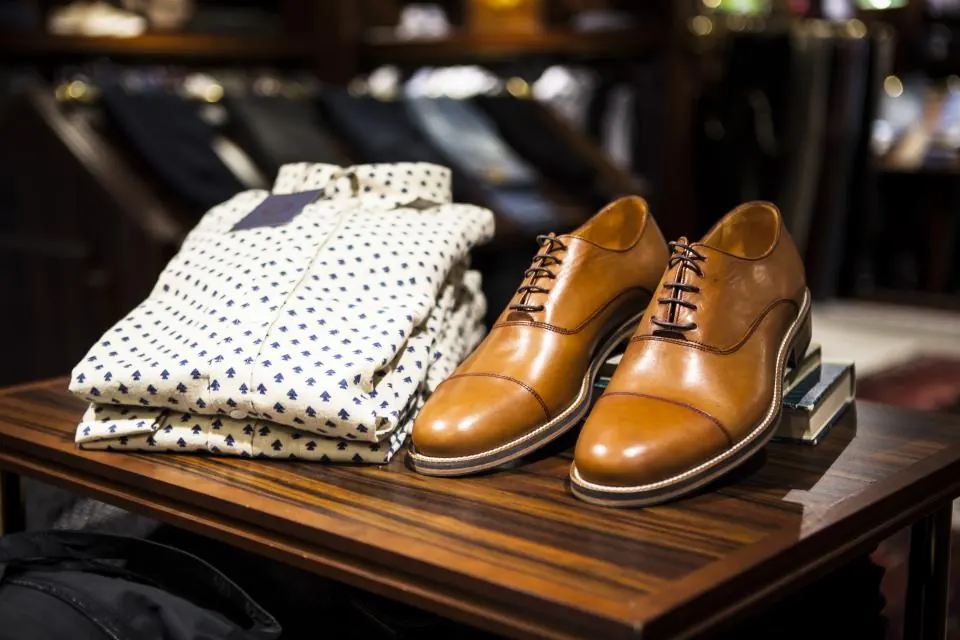
- Detail and texture. Concrete, brick, steel columns, the floor, close on fabric or product. These are the frames that make a story feel placed. The Florsheim still life notes describe how we work surfaces like this.
- From above or below. A mezzanine or a ladder gives the elevated frame that shows the floor as a graphic plane; lying on the floor gives the ceiling and the windows as a vault.
Plan the day around the light: hard sun when it comes through for the graphic frames, soft light in the morning or late afternoon for faces, strobe setups in the middle of the day when the windows are least cooperative.
Practicalities
Bring sandbags: polished concrete and stands are a bad combination. Bring more extension cord than you think, because the outlets in a loft are wherever the previous tenant needed them. Check the freight elevator hours; many downtown buildings lock them at 6 p.m. Confirm whether the building needs a certificate of insurance; most do. And leave time to put the furniture back where the photographs on the listing showed it.
For a deeper reference on balancing strobe with daylight, including the math for high-speed sync, B&H's lighting tutorials cover the fundamentals in detail. The loft-specific version is simpler than it looks: decide what the windows are for, meter them, and light the person to match.