Polaroid Eyewear and the Craft of Shooting Polarized Sunglasses
Polaroid eyewear is a name long tied to polarized lenses, and shooting that kind of product means showing what a lens does to light, not just how a frame looks on a face.
Photographing a lens, not only a frame
Polaroid eyewear belongs to a category where the lens technology is the selling point. Polaroid as a company has long been associated with polarizing filters, and sunglasses marketed around polarized lenses ask photographers for something unusual: to show a reduction of glare, an invisible effect, in a still image.
Most sunglasses campaigns treat the lens as a dark surface or a mirror. A polarized-lens story needs to go further, using water, wet roads, car windshields and bright sky, the exact situations where polarization makes a difference, as the setting for the product.
Plan the shot list around three jobs. The first is desire: attractive people in bright places wearing the frames. The second is proof: images or short loops that show glare disappearing. The third is clarity: clean product shots that let a shopper compare shapes and lens tints. A campaign that covers only the first job looks like every other sunglasses ad.
Showing polarization in a frame
The classic demonstration is the split view. Hold a polarized lens in front of the camera, or mount a circular polarizer, and photograph a glare-heavy scene such as the surface of a lake or the ocean at Venice, so half the frame sees through the lens and half does not. The glare disappears on one side and you can see beneath the water. This works for social content and product pages alike.
On model, place talent near water or reflective surfaces and shoot through a polarizer on your own lens, tuned to cut glare in the background. The scene then looks the way the wearer would see it. Note the trade-off: the same filter can also darken or alter the reflections in the sunglasses themselves, so rotate it while watching the lens on the model.
Polarized lenses viewed through a polarizer at the wrong angle can go nearly black or show rainbow stress patterns in some materials. Test every frame in the collection under your filter before the shoot day.
The hardest thing to sell in a photograph is something that is no longer there. Polarized lenses are exactly that.
Model campaigns in bright places
Sunglasses belong in sun, and Los Angeles makes that easy. The Venice boardwalk, the Santa Monica Pier, Malibu's beaches, desert roads toward Joshua Tree and the reservoirs around Silver Lake all offer hard light and reflective surfaces that justify the product.
Backlight is your friend. Placing the sun behind the model separates hair from background and lets you control the face with a reflector or a fill strobe, avoiding squinting. A model wearing the product will be more comfortable in direct sun than most, but still rotate looks to keep expressions relaxed.
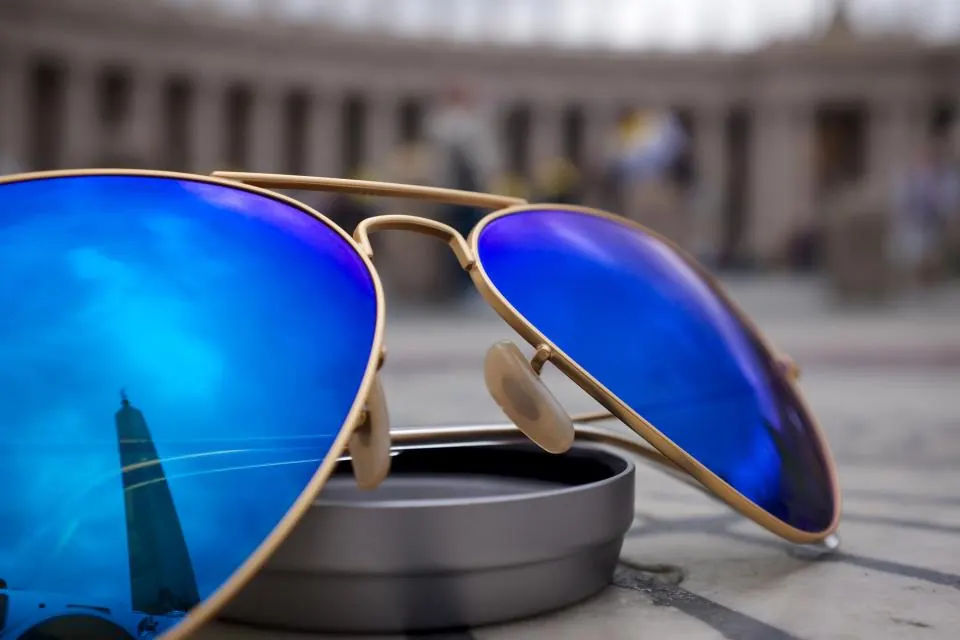
Watch what the lenses reflect. On mirrored and gradient lenses, the reflection becomes part of the image, so place the camera and crew so the lens shows sky, sea or a pleasing street rather than a light stand.
Product sets for sunglasses
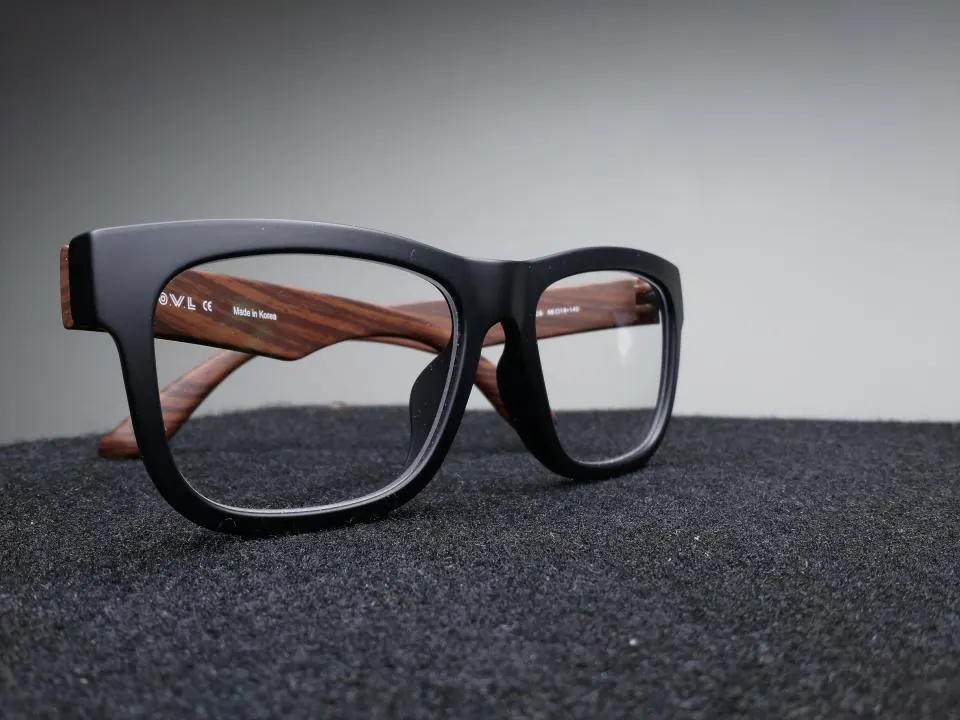
Sunglasses product photography is a reflection management exercise. Use a light tent or two large diffusers on either side with the camera shooting through a gap, and place a white or gray card above the lenses to give them a smooth gradient. Black cards remove hot spots on temples and hinges.
Shoot front, three-quarter, side and folded positions, with frames supported on clear acrylic or museum putty so they sit level. A 100mm macro lens and focus stacking keep hinges, logos on temples and lens edges sharp across the whole frame. Match lens color carefully, since tinted lenses shift easily in post and customers notice. For mirrored lenses, shoot a frame with a colored card reflected in the lens, which shows the mirror coating without picturing the studio.
Good Polaroid eyewear-style imagery ends up doing two jobs: inviting someone to wear the frames, and proving the lenses earn their place.